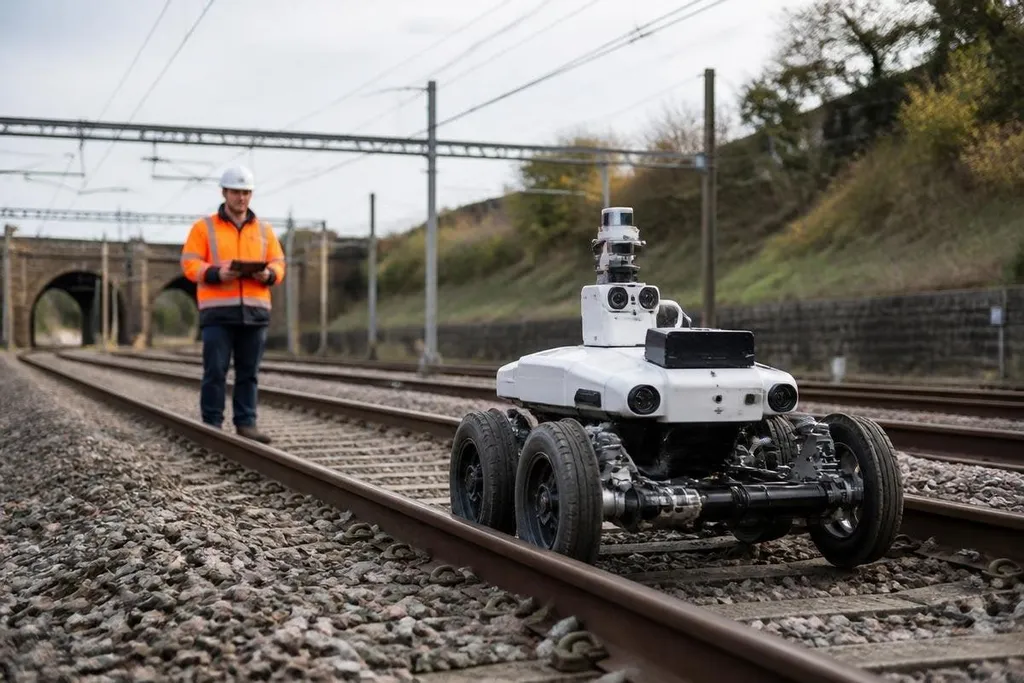
Railway robots already work near tracks, tunnels, bridges, and overhead equipment. AI changes the job by helping these machines read sensor data, spot faults, and choose what to inspect next without sending every decision back to a control room.
The shift matters to railway teams because track access is costly and safety rules limit working time. Software can reduce the amount of raw video and sensor data that staff must review, but its value depends on careful checks and clear limits.
Quick read
- AI can sort images, sound, and vibration data before a person reviews it.
- A railway robot still needs safe movement, reliable sensors, and a human approval step.
- The open question is how well these systems work across weather, track types, and rare faults.
What AI adds to railway robots
A robot can collect data with cameras, LiDAR, thermal sensors, microphones, and vibration sensors. AI software can then compare that data with known patterns, such as a damaged rail surface, a loose fitting, or an unusual motor sound.
That process is called inspection classification. The software does not understand a railway in the way a technician does. It matches new sensor data against patterns in its training data, then marks areas for review.
This can change the order of work. A robot may scan a long section of track, sort findings by likely risk, and send the clearest images to an engineer first. The engineer still decides what the fault means and what repair should follow.
The same approach can help with route planning. A robot using simultaneous localization and mapping, or SLAM, builds a map while it moves. The software can help it recognize rails, sleepers, cables, tunnel walls, and objects that may block its path.
That recognition matters when the robot leaves a clean test area. Rail corridors contain ballast, mud, standing water, shadows, metal surfaces, and changing light. A system trained only on neat images may miss a fault when the scene looks different.
Why the change matters for railway teams
Inspection robots collect more information than a person can review at the same speed. Sorting that information can shorten the time between a scan and a maintenance decision, especially when the system marks the same location across repeat inspections.
The useful output is a location, an image, a sensor reading, and a reason for the alert. A vague warning creates more work. A time-stamped image tied to a track section gives a technician something they can check.
Remote operation is another use. A person may guide the robot through a difficult section, then let onboard software handle slower, repeated movement. This reduces the amount of manual control needed, but it does not remove the need for a trained operator.
Daily rail work adds details a short video leaves out: the route, weather, faults, and repair time. Railway robotics reporting from Robot24.com can place those facts beside an AI claim, so you can judge whether the system works beyond a controlled run.
Where AI still falls short
Rare faults are a hard problem. A system may see thousands of normal rail sections but only a small number of serious defects. That can lead to missed faults or too many false alerts, and both outcomes cost time.
Weather adds another problem. Rain can change camera images, dust can affect sensors, and snow can hide track details. Night work also changes the data that an AI model receives. A robot that works well in daylight needs separate checks before anyone relies on it after dark.
Railway robots also face strict safety demands. They must know where they are, avoid people and equipment, stop when communication fails, and keep clear of live electrical systems where the task requires it.
AI may support these functions, but a safety case needs test records, operating limits, and a recovery plan.
I’d treat AI as a sorting and decision-support layer until railway operators publish field results for the exact task, route, and weather conditions involved.
A practical buying checklist
Before choosing an AI system for railway robotics, check these points:
- Name the task: Decide if the robot will inspect rails, overhead lines, tunnels, or equipment.
- Check the data: Ask which sensor types and weather conditions appear in the training and test sets.
- Measure false alerts: Find out how often staff must review warnings that turn out to be harmless.
- Keep human control: Set the points where an engineer must approve movement, alerts, or maintenance work.
- Plan failure recovery: Confirm what happens after lost communication, poor visibility, or a sensor fault.
The next useful proof will come from repeat inspections on the same railway section, with results across daylight, rain, dust, and night work. Until operators publish those records, AI makes railway robots more useful on paper, while the track remains the place where the claim gets tested.